
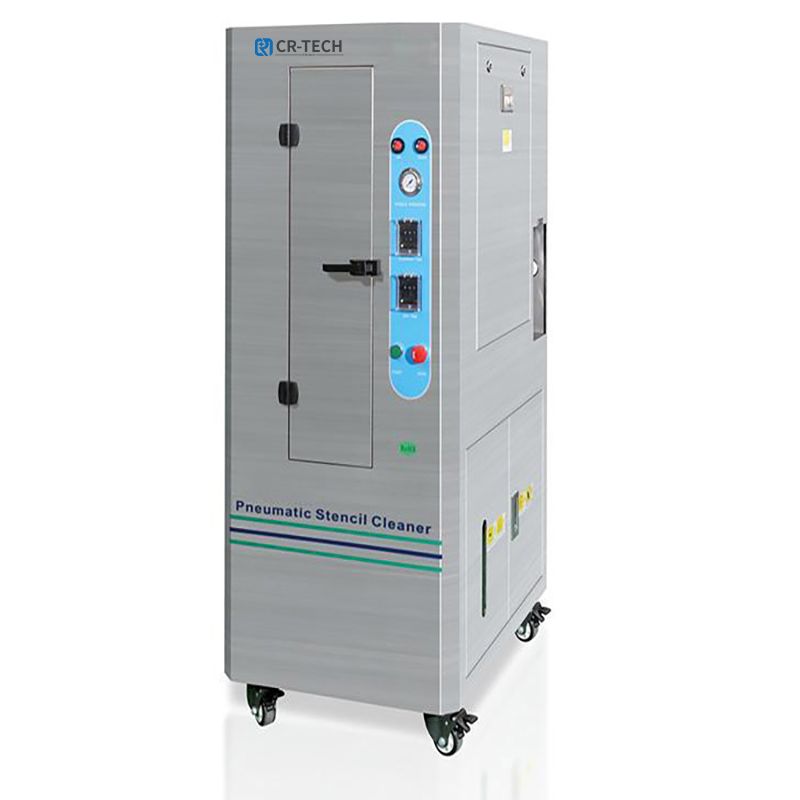
The Pneumatic Stencil Cleaning Machine: Ensuring Precision and Safety in Modern SMT Assembly
The Pneumatic Stencil Cleaning Machine: Ensuring Precision and Safety in Modern SMT Assembly
In the fast-paced world of electronics manufacturing, the Surface Mount Technology (SMT) assembly process is the backbone of modern production. At the heart of this process lies the solder paste printing stage—a critical step where industry data suggests more than 60% of SMT defects originate . As circuit designs become increasingly complex with finer pitches and smaller components, the margin for error shrinks dramatically. This is where the pneumatic stencil cleaning machine emerges as an indispensable asset for any serious SMT line, delivering safety, precision, and cost-efficiency.
The Fundamental Challenge: Why Clean Stencils Matter
The primary goal of the SMT printing process is to deposit a precise volume of solder paste onto the PCB pads. A dirty stencil, with apertures clogged by residual solder paste, flux, and adhesives, compromises this goal. Clogged apertures can lead to a host of defects, including:
-
Solder Bridging: Excess solder creates shorts between adjacent pads .
-
Insufficient Solder Deposits: Partial blockages reduce solder volume, leading to weak joints .
-
Solder Ball Formation: Residues transfer to unintended areas and melt into conductive balls .
-
Inconsistent Paste Geometry: Uneven deposits cause variation and alignment issues .
These defects lead to costly rework or scrap, reducing overall yield. The solution lies in a robust, repeatable cleaning process that automates residue removal without damaging the delicate stencil .
The Working Principle: Harnessing the Power of Compressed Air
A pneumatic stencil cleaning machine operates on a simple yet highly effective principle: it uses compressed air as its sole power source, eliminating the need for electricity and the associated fire risks often present when using flammable solvents . This design makes it an exceptionally safe choice for the manufacturing floor.
The cleaning cycle is typically an automated, closed-loop process comprising two main phases:
1. The High-Pressure Spray Cleaning Phase
The machine uses a pneumatic diaphragm pump to pressurize the cleaning solution (either solvent or aqueous-based). This pressurized fluid is propelled through specially designed, high-density nozzles that deliver a powerful spray onto the stencil. The key to its effectiveness lies in the 360° rotating spray rods positioned on both sides of the stencil .
-
The Impact: The dynamic, high-pressure jets (operating at 0.5-0.7 MPa) deliver a mechanical impact that dislodges even stubborn, hardened residues from the aperture walls and the underside of the stencil . This micron-level cleaning force penetrates deep into fine apertures, ensuring complete removal of flux and solder paste binders.
-
The Design: This closed-loop system ensures that cleaning and drying occur in a contained environment, preventing any leakage of gas or liquid .
2. The Drying Phase
Once the cleaning cycle is complete, the machine switches to a drying mode. Compressed air is directed through the nozzles and/or specialized air knives to blow off any remaining solvent residue. A thorough drying phase is critical to prevent residual solvent from contaminating the fresh solder paste in the next print cycle . This entire process is typically controlled by a single "one-touch" button, making operation incredibly simple .
The Role of the Filtration System
One of the most significant advantages of a modern pneumatic stencil cleaner is its high-precision filtration system. This system extends the life cycle of the cleaning agent and reduces operational costs .
The process typically utilizes a multi-stage filtration setup. For instance, a standard configuration may include a three-level filtration system (10μm, 5μm, and 1μm) , while some advanced models, like the DEZ-C730, use a sophisticated system to handle nano-level impurities . As the cleaning solution is sprayed, it falls into a reservoir and is drawn through these filters. This process recycles the solvent or aqueous detergent, removing solder balls, glue, and resin residue, allowing the cleaning solution to be reused many times and drastically reducing waste and consumable costs.
Conclusion: A Strategic Investment for Quality and Safety
The pneumatic stencil cleaning machine is more than just a piece of equipment; it is a strategic investment in quality control, operational safety, and cost reduction. By ensuring a 100% clean result from a repeatable, automated process, it directly addresses the leading cause of SMT defects. It safeguards your workforce by operating without electricity , and its low consumption of cleaning solvents contributes to a greener manufacturing process. For any SMT line aiming for high yield and zero-defect manufacturing, integrating a pneumatic stencil cleaning machine is a critical step towards achieving operational excellence.