
Axial vs. Radial Insertion Machines
Through-Hole Evolution: Axial vs. Radial Insertion Machines – Choosing the Right Path for Your PCB Assembly
Meta Description: Struggling to choose between axial and radial insertion machines? Discover the technical differences, component handling capabilities, and ideal use cases to optimize your mixed-technology production line.
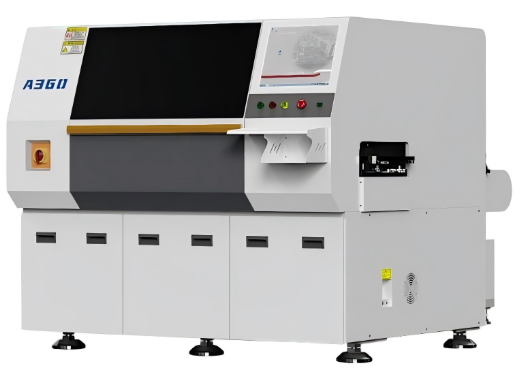
For decades, the Surface Mount Technology (SMT) revolution has dominated the electronics manufacturing landscape. However, the through-hole component has proven remarkably resilient. Whether for high-reliability connectors, large capacitors, or transformers, through-hole technology (THT) remains essential. To handle these components efficiently, manufacturers rely on two primary automated solutions: Axial Insertion Machines and Radial Insertion Machines.
While both serve the same fundamental purpose—placing leads into a PCB—their mechanics, component compatibility, and ideal production scenarios are vastly different. Here is a deep dive into the differences and how to leverage them for maximum ROI.
The Core Difference: The Orientation of the Lead
The distinction begins, quite literally, with how the component is packaged and oriented.
-
Axial Components: These have leads that extend from opposite ends of the component body along a common axis. Think of traditional resistors or diodes. The body sits parallel to the PCB surface when inserted.
-
Radial Components: These have leads that extend from one end of the component body, usually parallel to each other. Think of capacitors, transistors, or LEDs. The body sits perpendicular (vertical) to the PCB surface when inserted.
1. The Axial Insertion Machine (The "Sequential" Specialist)
Axial inserters are typically tape-fed, using a sequential process. The machine cuts the component from the tape, forms the leads, bends them, cuts them to length, and inserts them into the PCB.
Key Technical Characteristics:
-
Speed: Extremely high, often reaching rates of 15,000 to 25,000 components per hour.
-
Lead Span: The distance between the leads is determined by the tape spacing; adjustments require tooling changes.
-
Suitability: Best for components with consistent, straight leads that don’t require complex forming.
Ideal Use Cases:
-
High-Volume Consumer Electronics: Due to their speed, axial machines are the workhorses for power supplies, chargers, and TV mainboards where high volumes of resistors and diodes are used.
-
Automotive Lighting: For simple through-hole LEDs and standard diode arrays.
-
Simple Filter Circuits: Where the component is used simply for signal rectification without high-stress mechanical loads.
2. The Radial Insertion Machine (The "Kitting" Multitasker)
Radial inserters are generally more complex. They rely on a "kitting" method where the machine indexes the tape, cuts the component, and uses a mechanical "chuck" to rotate and position the leads precisely before insertion.
Key Technical Characteristics:
-
Flexibility: Generally handles a wider variety of shapes and sizes (up to 25mm or more in height).
-
Forming Capability: Able to perform "clinching" and "pre-forming" (such as "Kink" leads or "Lock-in" bends) to secure the part to the board before soldering.
-
Suitability: Best for large-body components that require precise orientation (polarity).
Ideal Use Cases:
-
High-End Industrial Equipment: Where large electrolytic capacitors are used for power smoothing.
-
Automotive ECUs: For connectors, relays, and crystal oscillators that require tight mechanical support.
-
LED Lighting Arrays: Radial machines excel at inserting cylindrical LEDs side-by-side with tight pitch requirements.
-
SMT + THT Mixed Boards: Ideal for "odd-form" components that cannot be placed by standard SMT pick-and-place due to weight or height.
When to Choose Which?
The decision is rarely about "which is better" but rather "which fits my portfolio."
-
Choose Axial if: Your throughput is king. You are running jobs with thousands of identical resistors. You need low cost-per-insertion and have consistent component footprints. Maintenance is simpler and tooling costs are lower.
-
Choose Radial if: Your board design demands versatility. You have tall capacitors or non-standard pin pitches. You need the machine to fold leads to hold the component securely during wave soldering. It allows for a higher component density per square inch because the body stands upright.
The Modern Hybrid Strategy
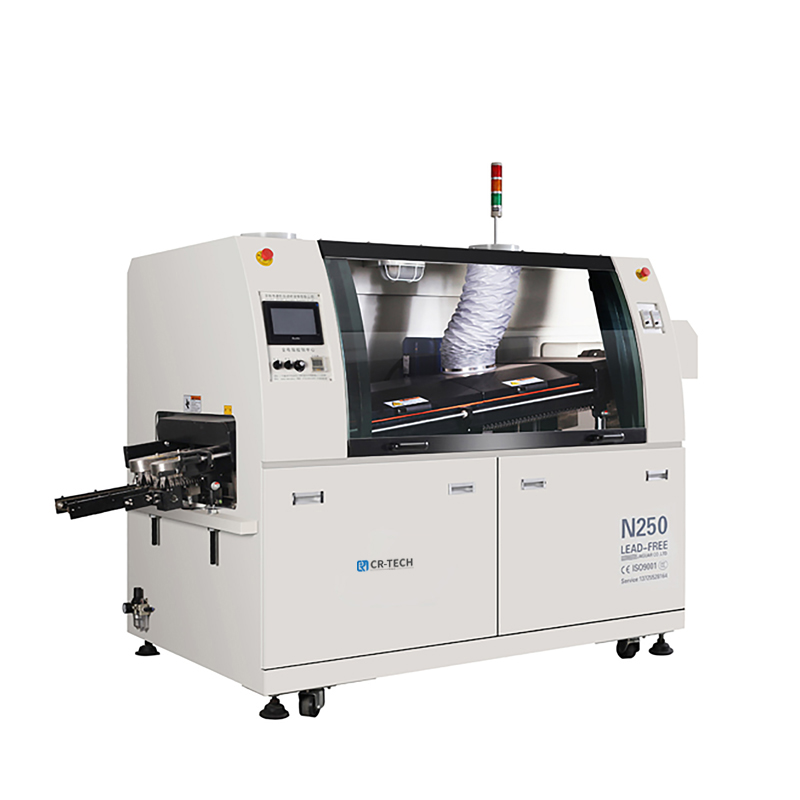
The most successful SMT operations are moving away from "Axial vs. Radial" and toward "Axial and Radial" integration. Today's advanced lines allow for seamless PCB panel handling, moving from SMT reflow to wave soldering with automated axial and radial insertion stations in-between.
Pro Tip for Efficiency: When ordering PCBs, ensure your hole plating and tolerances account for the lead thickness. Axial machines handle thinner leads well, but radial machines often handle thicker, stiffer copper leads that require larger annular rings to prevent solder voids.
Conclusion
Understanding the mechanical limitations and strengths of each machine is critical. Axial insertion machines offer unmatched economy and speed for passive components. Radial insertion machines offer the geometric freedom required for the specialized parts that differentiate your product.
By assessing your production mix—whether you are building 5 million power adapters or 50,000 high-power motor controllers—you can choose the right tool for the job. At [Your Company Name], we provide both high-speed axial solutions and versatile radial insertion systems to ensure your through-hole assembly is as efficient and reliable as your SMT process.