
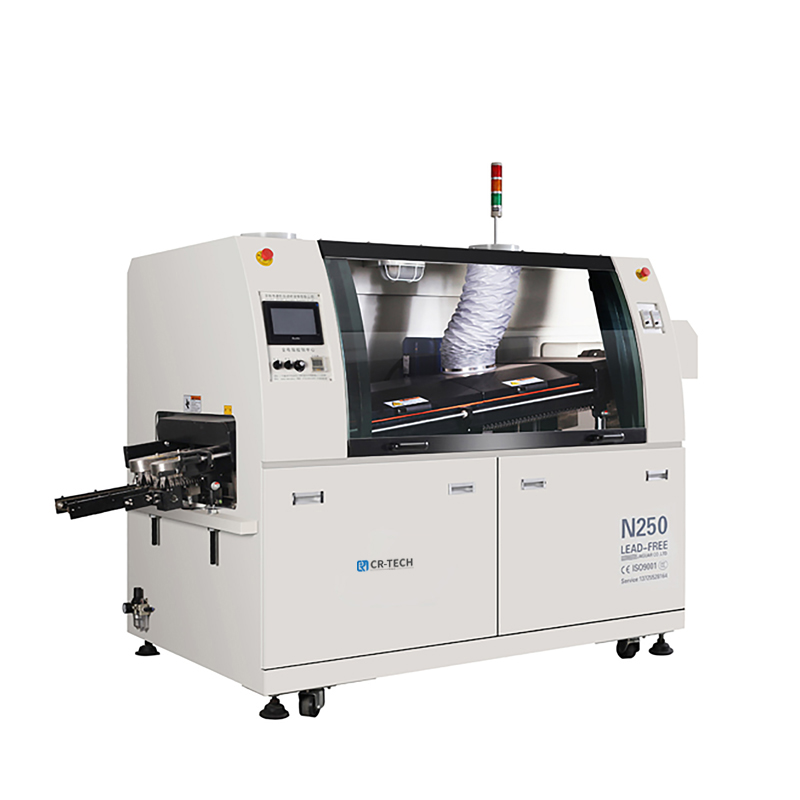
Selective Wave Soldering – Import or Chinese Brand? A Data-Driven Perspective for 2026
Selective Wave Soldering – Import or Chinese Brand? A Data-Driven Perspective for 2026
The Strategic Question Facing Electronics Manufacturers
For SMT and PCBA manufacturers scaling production in 2026, the equipment procurement decision comes down to a critical question: should we invest in a premium imported selective wave soldering machine, or can a Chinese-brand solution deliver comparable performance at a more accessible price point?
The answer isn’t about choosing the “best” in absolute terms—it’s about choosing the right fit for your production mix, product complexity, and commercial priorities.
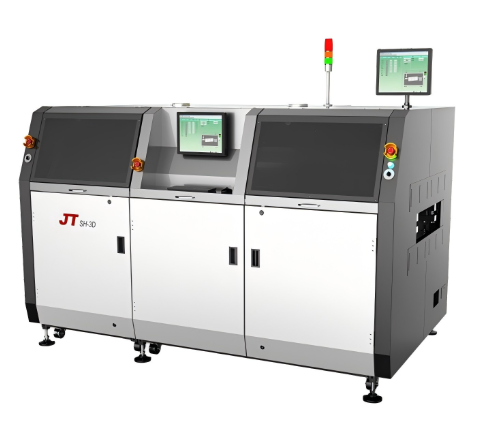
Where Imported Brands Still Lead
Imported selective wave soldering systems—led by established European and Japanese players like ERSA (Kurtz Ersa), SEHO Systems, and Pillarhouse International—continue to command respect in the most demanding applications. Their strengths are rooted in decades of continuous engineering iteration:
Exceptional precision for fine-pitch assemblies: Top-tier imported systems deliver repeatable positioning accuracy, closed-loop thermal compensation, and dynamic solder wave stability that can handle ultra-fine pitch PCBs with minimal defect rates .
Superior performance in high-reliability sectors: For aerospace, medical devices, military electronics, and high-end automotive applications requiring rigorous certification, imported equipment remains the default choice. These systems offer the traceability and process stability that certification bodies expect .
Advanced thermal management: The ability to control nitrogen temperature and maintain consistent through-hole solder fill—particularly critical for power electronics with demanding through-hole requirements—has historically been an area where imported systems like the US-made RPS selective soldering machines have demonstrated clear advantages .
However, this performance comes at a cost. Imported systems typically range from $150,000 to $250,000, compared to $100,000–$120,000 for comparable Chinese systems . More significantly, the total cost of ownership—including long-term maintenance, spare parts availability, and service response times—tends to be substantially higher for imported brands, particularly outside major metropolitan centers.
Why Chinese Brands Are Closing the Gap
The competitive landscape has shifted meaningfully. According to market data from China’s Yangtze River Delta region, domestic selective soldering equipment now accounts for 67% of regional procurement, with market share for imported brands steadily declining . This isn’t just about price—it reflects tangible improvements in Chinese manufacturing capabilities.
Cost-performance advantage: Chinese brands offer compelling value for the vast majority of production scenarios. The initial investment is roughly 30–50% lower, and operational costs—including consumables, energy consumption, and maintenance—can be significantly reduced. Selective soldering itself reduces solder dross, flux consumption, and cleaning requirements compared to traditional wave soldering, amplifying the cost benefits of Chinese equipment .
Rapid service and customization: Domestic manufacturers—such as JT Automation (劲拓), SunEast (日东), and Melway (迈威)—have built extensive service networks that offer fast on-site support, shorter lead times, and a willingness to customize equipment for non-standard production requirements. This is a practical advantage that imported brands often cannot match due to centralized supply chains and longer service response cycles .
Proven track record in high-growth sectors: Chinese selective soldering systems have gained significant traction in new energy vehicle electronics, energy storage inverters, industrial controls, and consumer electronics—segments where reliability and throughput are paramount . Manufacturers with proprietary R&D capabilities in core technologies like motion control algorithms, vision systems, and thermal management are delivering performance that meets these demanding production standards.
The Data-Driven Procurement Framework
The optimal choice depends on your specific production context:
Choose Imported If:
-
Your products serve medical, aerospace, or high-end automotive markets with strict certification requirements
-
Your PCB assemblies involve ultra-fine pitch components (below 1.0mm nozzle diameter) with minimal clearance between pads
-
Your production volume justifies the premium investment and you require industry-leading process capability (Cpk > 1.67)
-
Your organization has the maintenance infrastructure to support imported equipment lifecycles
Choose Chinese Brands If:
-
You operate in new energy, energy storage, industrial controls, or consumer electronics where quality and throughput are critical but margins require cost discipline
-
Your production involves mixed-technology assemblies requiring flexible, customizable soldering solutions
-
You prioritize rapid service response, shorter equipment lead times, and lower total cost of ownership
-
Your production is small-to-medium volume or high-mix, where the flexibility of Chinese systems—including offline benchtop models—delivers excellent ROI
Looking Ahead
The selective soldering equipment market is projected to grow at a CAGR of 5–7%, reaching approximately $288 million globally by 2031 . As electronics assemblies continue to increase in density and complexity, the demand for precision localized soldering will only intensify.
Chinese manufacturers have closed the technical gap substantially in mainstream applications, and the trend toward localized supply chains and digital manufacturing—including MES integration and AI-driven process control—further favors domestic suppliers with agile development cycles .
Conclusion
The old binary choice—“imported equals premium, Chinese equals compromise”—is no longer accurate. For the vast majority of electronics manufacturers, particularly those serving the rapidly expanding new energy and industrial automation sectors, Chinese selective soldering equipment offers a compelling combination of performance, serviceability, and value. Imported brands remain the gold standard for the most demanding, mission-critical applications where certification and absolute reliability override cost considerations.
The smart procurement strategy is not “import or domestic,” but rather “right-fit for your product mix and production scale.” Evaluate total cost of ownership, assess your after-sales support requirements, and demand proven performance data from potential suppliers. The market has matured—both options are viable, but only one is likely to be optimal for your specific operation.