
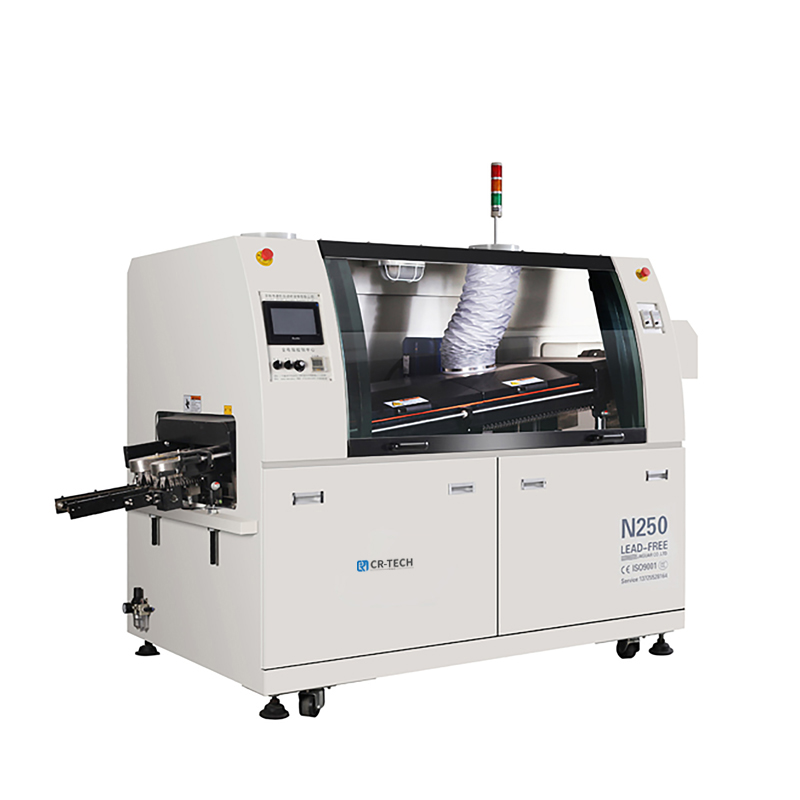
SMT PCB Depaneling Machines types and How to Choose the Right One
SMT PCB Depaneling Machines types and How to Choose the Right One
In SMT assembly, PCBs are often manufactured in panels to improve efficiency. Once assembly is complete, the individual boards must be separated—a process called depaneling. Choosing the wrong method can lead to cracked components, stressed solder joints, or low output.
As an SMT professional with 10 years in equipment manufacturing, I will break down the main types of PCB depaneling machines and the key criteria for selection.
3 Main Types of PCB Depanelers
1. V-Cut (Scoring) Depanelers
This is the most common type for PCBs with pre-routed V-grooves.
-
How it works: Circular blades run along the V-groove, breaking the thin remaining material.
-
Best for: Straight-line cuts only. Ideal for simple, rectangular panels.
-
Pros: Fast, dust-free, low cost, minimal stress.
-
Cons: Cannot cut irregular shapes; requires pre-routed V-grooves.
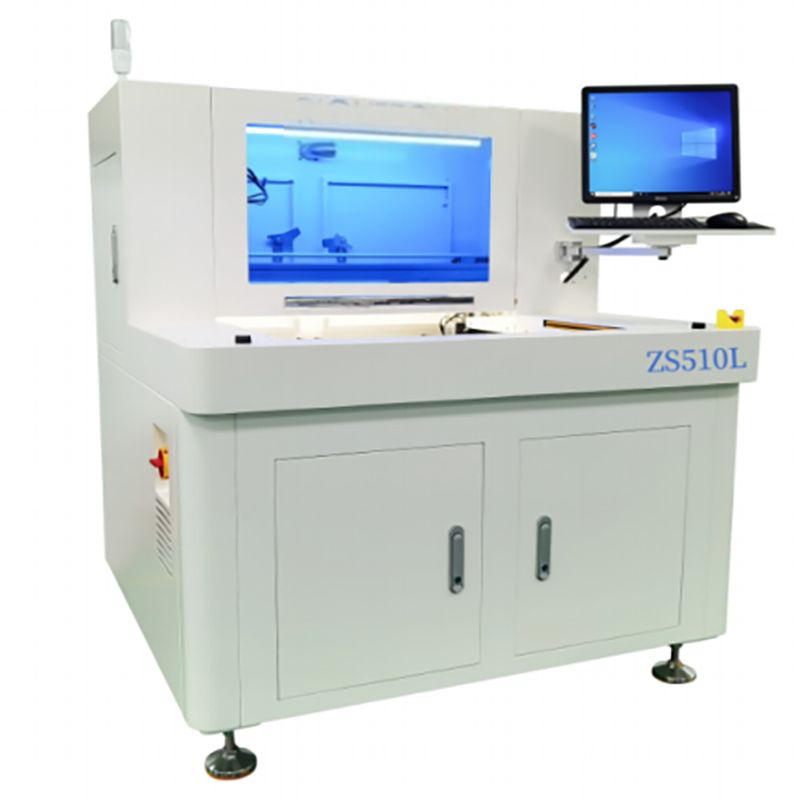
2. Router Depanelers
These use a high-speed milling bit (spindle) to cut PCB material.
-
How it works: A CNC-controlled router follows a programmed path to cut the tab connecting boards.
-
Best for: Complex shapes, round boards, thick PCBs, or multiple board sizes.
-
Pros: Extremely flexible; low mechanical stress; high precision (±0.02mm).
-
Cons: Produces dust (requires vacuum system); slower than V-cut; higher initial investment.
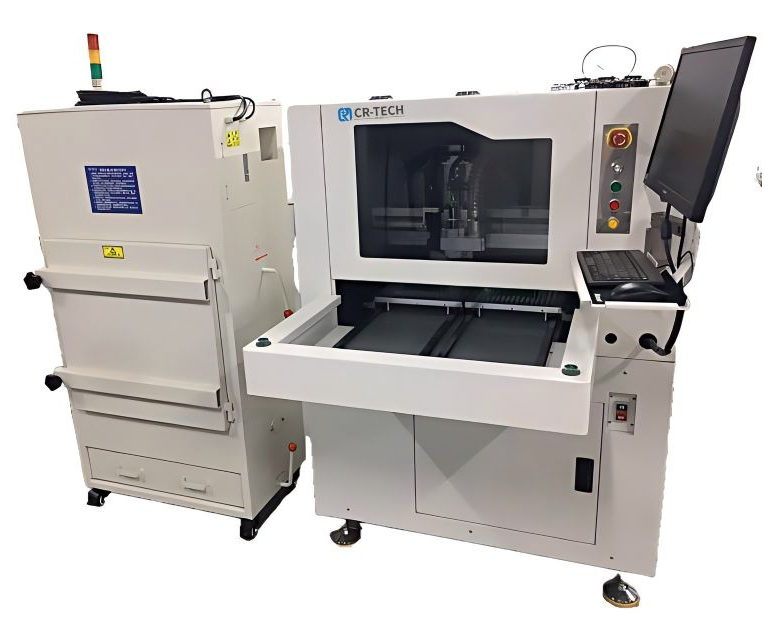
3. Laser Depanelers
A non-contact method using a focused laser beam to vaporize PCB material.
-
How it works: The laser melts/cuts through FR4, ceramic, or flexible substrates without physical force.
-
Best for: Flex PCBs, very thin boards, ceramic substrates, or zero-stress requirements.
-
Pros: No tool wear; zero mechanical stress; highest precision; no dust (vaporized).
-
Cons: Very high cost; can char edges if not optimized; slower for thick boards.
How to Choose the Right Depaneler – 5 Key Factors
1. PCB Shape & Breakaway Method
-
Only V-grooves? → Pneumatic or blade V-cut depanelers are the cheapest and fastest.
-
Complex contours or tabs? → You need a router depanelers. V-cut cannot handle non-linear cuts.
2. Production Volume
-
Low-mix, high-volume (e.g., 10,000+ boards/day of same type) → Inline automatic depanelers (router or V-cut with auto load/unload).
-
High-mix, low-volume (frequent changeovers) → Benchtop manual or semi-auto routers. Quick programming is key.
3. Component Clearance
Check your board underside. Tall components (transformers, large capacitors) near the cut line can collide with the lower blade or fixture.
-
Standard V-cut requires 3-5mm clearance.
-
Router or laser can use custom fixtures to avoid tall parts.
4. Mechanical Stress Sensitivity
If your boards have ceramic capacitors, BGAs, or glass substrates:
-
Avoid pneumatic V-cut (impact stress).
-
Choose router (low force) or laser (zero force).
5. Budget & ROI
| Type | Equipment Cost | Tooling Cost | Maintenance |
|---|---|---|---|
| V-cut | $2k – 15k | Low (blades) | Low |
| Router | $8k – 60k | Medium (bits, vacuum filters) | Medium |
| Laser | $50k – 200k+ | None | High (laser source) |
For most SMT workshops starting with V-cut panels, a pneumatic V-cut depanelers offers the best value. As you move to higher-mix or complex shapes, invest in a desktop CNC router.
Quick Recommendation Guide
| Your Scenario | Recommended Machine |
|---|---|
| Mass production of LED or simple power boards (straight lines) | Automatic Inline V-Cut |
| Prototyping / repair shops with many board types | Manual Benchtop Router |
| High-volume smartphone or automotive modules | Inline Router + Cleaning Station |
| Flex circuits or ceramic boards | UV Laser Depaneler |
Final Tip: Don’t Ignore Handling & Safety
Regardless of type, ensure your depanelers includes:
-
PCB fixture (holds board flat during cutting)
-
Vacuum/dust collector (for routers) or fume extractor (for laser)
-
Solder ball & stress verification – Always inspect first batches with magnification and electrical test.
Choosing the right PCB depanelers directly impacts your defect rate and throughput. Start with your board design and volume, then match the technology accordingly. Still unsure? Test your actual panel with a machine supplier before purchase.